
While AI applications have reshaped how we access information and create content, the book industry has largely stuck to a traditional model of reading or listening to static material. This is exactly what pushed the Egyptian startup Sinai.ai to build a different model. Their goal is to transform books from static digital products into interactive experiences where readers can engage, understand, and even reshape the content to fit their needs. Sinai.ai presents itself as an AI-powered book platform, aiming to redefine how we interact with books through what they call “Living Books.” This means your relationship with a book doesn't end on the last page. Instead, you can ask questions, discuss ideas, get explanations and summaries, listen to the content, translate it, and even create educational materials from it. This direction comes from a clear belief that technological advancement isn't just about turning paper books into electronic versions; it can also change the very nature of the product itself. The company believes that e-books largely kept the traditional book's static nature, while audiobooks added another way to consume them, but neither made the reader an active participant. That's why Sinai.ai is trying to embed an AI layer directly into the reading experience.
From E-book to aiBook
The platform centers around its product, aiBook™, which the company describes as a new AI-powered book format that transforms traditional works into multimedia, customizable experiences. aiBook doesn't just treat a book as text to be summarized. It lets readers interact directly with the content. You can ask about an idea, term, or passage and get an explanation, summary, or examples. You can also have conversations about the book's topics and ideas. Users can even create personalized reading guides, save notes and link them to content, and build a timeline of events and developments within the book. The experience goes beyond just reading text. The platform lets you switch between reading and listening, translate content into multiple languages, and even turn book content into educational tools like workbooks, quizzes, and interactive questions. This makes the book useful for learning and revision, not just passive reading. The company says, for example, that a user can read a book in English and ask for explanations of its ideas in Arabic. You can also listen to content while commuting or doing other activities, then return to reading anytime. The platform supports several major languages, including Arabic, English, Spanish, and German.AI Without Copyright Infringement
One of the most important aspects of Sinai.ai's model isn't just about its technical features, but how it handles intellectual property rights—one of the most complex issues at the intersection of AI and content creation. The company adopts what it calls a “legal-first approach.” They state that they obtain full book texts from publishers and copyright holders under licenses. This allows the platform to run AI tools on the complete content of the book within a legal framework that complies with copyright laws. This point is especially important when comparing the platform to general AI tools. Sinai.ai focuses on providing the full context of the book within the reading experience, instead of requiring users to copy parts of a book into an external AI tool. According to the company, this model allows for retaining the book's context and details across different chapters, while providing specialized tools for analysis, exploration, and interaction with longer works. So, Sinai.ai isn't just betting on the reader; it's also trying to build a direct relationship with the publishing industry itself. It offers a model that allows publishers to list their catalogs on the platform and reach new readers, while also providing analytics on user interaction and a revenue-sharing model.A Platform for Readers, Publishers, and Educational Institutions
The company is expanding its model to include more user categories. For readers, it offers an interactive reading experience that can be customized by language, needs, and consumption style. For authors, it provides the ability to publish their works directly, build reader communities, add an AI-powered interactive layer to their books, and earn recurring revenue based on the platform's model. For publishers, Sinai.ai allows them to distribute their catalogs and discover new readers, along with AI-enhanced pages, book summaries, dashboards for analyzing reader engagement, and revenue reports. The company also targets schools, universities, and libraries with institutional plans, customized reading lists, and the ability to track student progress and interaction with content. This diversity in clients reveals that the company's model isn't just a consumer application aimed solely at readers. Instead, it operates in an area that combines AI technology, digital publishing, education, and content. This gives it multiple potential channels for revenue generation and expansion.Betting on a Book Market Exceeding $150 Billion
The company bases its expansion on a massive global market, noting that the global book market value exceeds $150 billion. They believe that the basic form of the book remaining unchanged for decades opens the door for a new model based on AI, interaction, and personalization. However, the challenge for Sinai.ai isn't just proving that technology can offer a better experience. It's also about convincing readers that this experience is worth switching to, and at the same time, convincing publishers that integrating AI into their works can open new markets and revenues without threatening their intellectual property rights. This is why the company seems to be trying to address both sides of the equation simultaneously. Developing the reading experience represents the demand side, while obtaining licensed content and building partnerships with publishers represents the supply side. Sinai.ai states that it has already secured partnerships with over 10 publishers and aims to launch a library with thousands of titles. This indicates that building a content base is a fundamental part of its expansion strategy, not just a complementary element to the technology. Ahmed Kamel, co-founder and CEO of Sinai.ai, leads the company in this phase of product development and partnership expansion. The company describes him as a tech entrepreneur who co-founded two companies and studied AI, technology, and innovation at the graduate level at Stanford University. The choice of the book industry as a field for applying an AI-based model comes at a time when competition is accelerating between content platforms and general AI tools. This means Sinai.ai's success is linked to its ability to transform its idea from mere technical features into a new habit for readers.$1.45 Million to Support Expansion
In April 2026, Sinai.ai secured $1.45 million in Pre-Seed funding. This round was led by KAUST Innovation Ventures and DisrupTech Ventures, with participation from Maza Ventures and YOUXEL Ventures, along with a group of angel investors. The company plans to use the funding to develop its technology, AI infrastructure, acquire users, and expand content licenses. This funding represents a significant point in the company's transition from the idea and product building phase to expanding usage and partnerships. It also reflects investor interest in a model at the intersection of AI and the content industry, especially as the company seeks to build a new technological layer on top of an existing publishing market.From Passive Reading to Interaction
Ultimately, Sinai.ai's main bet isn't just about adding a chatbot to books; it's about changing the relationship between the reader and the content. The platform wants to make books capable of answering, explaining, summarizing, translating, listening, and interacting, while also transforming the content itself into customizable educational and visual tools. Currently, Sinai.ai is operating in a Beta system, gradually onboarding users through early access requests, while preparing for a wider service launch with plans to offer thousands of interactive books. With this model, the Egyptian company is betting that the future of books won't just be a digital copy of paper, but content that can interact with the reader, understand their needs, and offer more than one way to consume it. If Sinai.ai succeeds in turning this vision into a widely used experience, it won't have just added a new AI tool to the book market; it will have attempted to redefine the book itself as an interactive digital product.Related editorial

Dr. Hisham Hadara: An Egyptian Tech Leader's Journey in Semiconductors and Innovation
Dr. Hisham Hadara's impressive career began in electrical engineering and microelectronics, leading him to become a prominent figure in advanced electronic systems. With over 40 years of experience, he's now the CEO of Si-Ware Systems, a company at the forefront of semiconductor and sensor technology. His journey showcases a remarkable blend of academic research, entrepreneurship, and deep tech innovation, making a significant impact from Egypt to global markets.
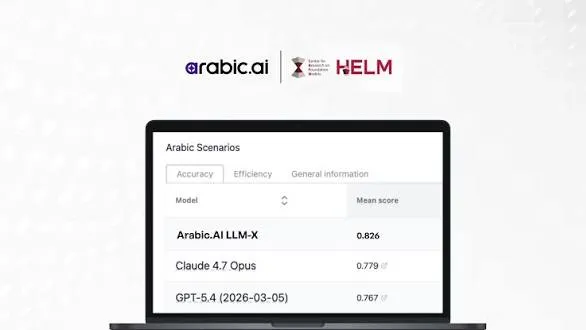
Arabic.AI and Stanford Launch New Standard for Evaluating Arabic AI Models
Arabic.AI has teamed up with Stanford University to introduce HELM Arabic Enterprise, a new platform designed to evaluate Arabic AI models for businesses. This initiative focuses on assessing models across six key enterprise tasks, including content creation, financial analysis, and legal question-answering, aiming to provide a clear and reliable way for companies to choose the best AI solutions.

iSchool and Royalty Language Schools Partner to Empower Students with Future Tech Skills
This exciting partnership between iSchool and Royalty Language Schools is all about getting students ready for tomorrow! The program will help them build essential skills like logical thinking, problem-solving, and using modern technology, ensuring they're well-prepared for the fast-evolving job market and a tech-driven future.
UMAMI Launches LOS to Connect Learning with Skills, Backed by EGP 50M+ Investment
UMAMI is excited to launch its new Learning Operating System (LOS) to better connect learning with employee skills, performance, and overall workforce readiness. This big step is part of an investment plan exceeding EGP 50 million, with a clear focus on expanding into regional markets.