
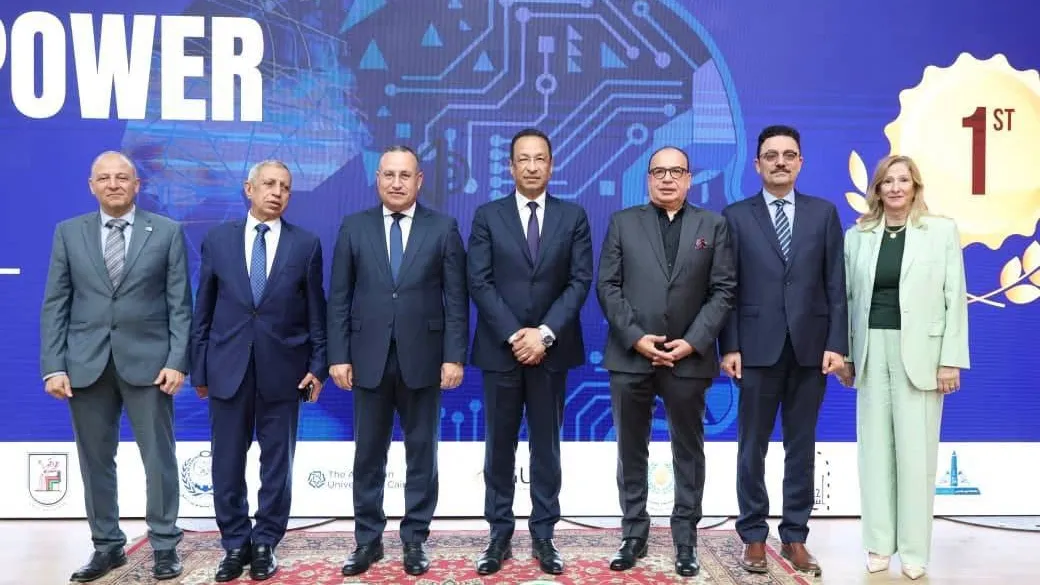
Efforts to build digital competencies in Egypt are now focusing on transforming artificial intelligence from a theoretical field into practical tools and solutions that serve vital sectors. This involves expanding partnerships between the government, universities, and the private sector to prepare a new generation capable of developing technologies that meet local market needs and national priorities.
In this context, the Ministry of Communications and Information Technology (MCIT) and the Ministry of Higher Education and Scientific Research concluded the fourth round of the Universities' AI Capacity Building Initiative. This initiative, launched by MCIT in collaboration with Dell Technologies, aims to enhance technical knowledge and support innovation in AI applications within Egyptian universities.
The fourth round saw 1,090 students from 10 public, private, and national universities receive training. These universities included Cairo University, Ain Shams University, the American University in Cairo, the German University in Cairo, the Arab Academy for Science, Technology & Maritime Transport, the Egypt-Japan University of Science and Technology, Assiut University, Mansoura University, Alexandria University, and Egypt University of Informatics. Participants completed 445 projects to develop technological solutions in five key areas: smart agriculture, smart traffic, smart government, digital healthcare, and smart economy.
The initiative also included an AI hackathon focused on innovating smart solutions in the new and renewable energy sector. This hackathon involved 105 students representing 21 teams from the participating universities, with 10 teams qualifying for the final stage before the top three winning teams were announced.
Engineer Raafat Hendy, Minister of Communications and Information Technology, stated that the initiative's expansion since its launch and the increase in participating universities reflect the success of the partnership model between the government, universities, and the private sector. This model effectively links academic knowledge with labor market demands and practical applications.
He explained that excellence in AI is not just about possessing modern technologies, but also about the ability of skilled professionals to utilize them to understand challenges, design applicable solutions, and measure their impact on citizens' lives, institutional efficiency, and the economy's growth potential.
He pointed out that AI capacity building is one of the main pillars of the National AI Strategy and the efforts of the Applied Innovation Center to transform research and development into practical applications that serve state sectors and society. He also mentioned the development of the "Karnak" model, a large language model in Arabic, alongside AI applications in early disease detection, agriculture, and education.
Hendy emphasized that the goal is not limited to developing advanced technical models, but rather to build Egyptian capabilities that can innovate solutions tailored to the national language, culture, needs, and priorities. He noted that choosing the new and renewable energy sector as the focus for the hackathon was due to it being a field that combines national priorities with promising career opportunities for youth.
He added that developing smart solutions in the energy sector can contribute to predicting production and demand, improving network management, rationalizing consumption, reducing waste, and enhancing resource efficiency. He clarified that the next phase aims to connect promising projects with mentorship and incubation programs and entities capable of transforming them into products, startups, and applicable solutions.
For his part, Dr. Abdelaziz Konsowa, Minister of Higher Education and Scientific Research and Acting Minister of Culture, stressed the importance of utilizing AI applications to support the transformation of Egyptian universities into smart universities and leveraging modern technologies to develop the educational process and university services.
He indicated the ministry's continued support for digital transformation within the higher education and scientific research system, explaining that establishing Technology Parks within universities is a crucial path for converting scientific research outcomes and innovative ideas into economic and industrial projects, supporting startups, and transferring and localizing technology.
He emphasized the importance of strengthening the link between the academic community and the industrial sector, bridging the gap between educational outcomes and labor market needs, in addition to supporting applied scientific research capable of producing solutions that serve the economy and society.
Dr. Hoda Baraka, Advisor to the Minister of Communications and Information Technology for Technological Skills Development, affirmed that the initiative has become a model for partnership between the ministry, universities, and the private sector in preparing specialized AI cadres. She noted that it aligns with the implementation of the National AI Strategy (2025-2030), which prioritizes talent development and capacity building.
Engineer Mohamed Amin, Senior Vice President for Central and Eastern Europe, Middle East, Turkey, and Africa at Dell Technologies, stated that as AI moves from experimentation to practical application, human capabilities become the most important factor in driving innovation. He affirmed the company's commitment to contributing to preparing the next generation of specialists and supporting digital transformation in Egypt.
Engineer Sameh Mahboub, General Manager of Dell Technologies Egypt's Center of Excellence, explained that the partnership with MCIT since the initiative's launch in 2022 aims to empower students with the necessary skills and tools to succeed in an AI-driven future. He emphasized that the initiative serves as a platform to support innovation and collaboration among various stakeholders.
During the ceremony, the winning teams of the AI hackathon were honored. Team Hacktastic from Ain Shams University secured first place, The Overfitters from the American University in Cairo came in second, and team NBAA from the Faculty of Computer Science and Information at Egypt University of Informatics won third place.
The initiative is part of a cooperation agreement between the Ministry of Communications and Information Technology and Dell Technologies to build the capabilities of the most creative students in Egyptian universities in AI fields, providing them with the necessary technical and professional support in line with labor market requirements.
Since its launch, the initiative has contributed to building the capabilities of 2,710 male and female students in AI and implementing 763 applied projects. This year also saw the signing of a tripartite agreement between MCIT, Dell Technologies, and AstraZeneca Egypt to utilize AI applications in the healthcare sector, through training students and providing mentorship and health data to help them develop solutions based on real-world challenges.
Tags
Related editorial
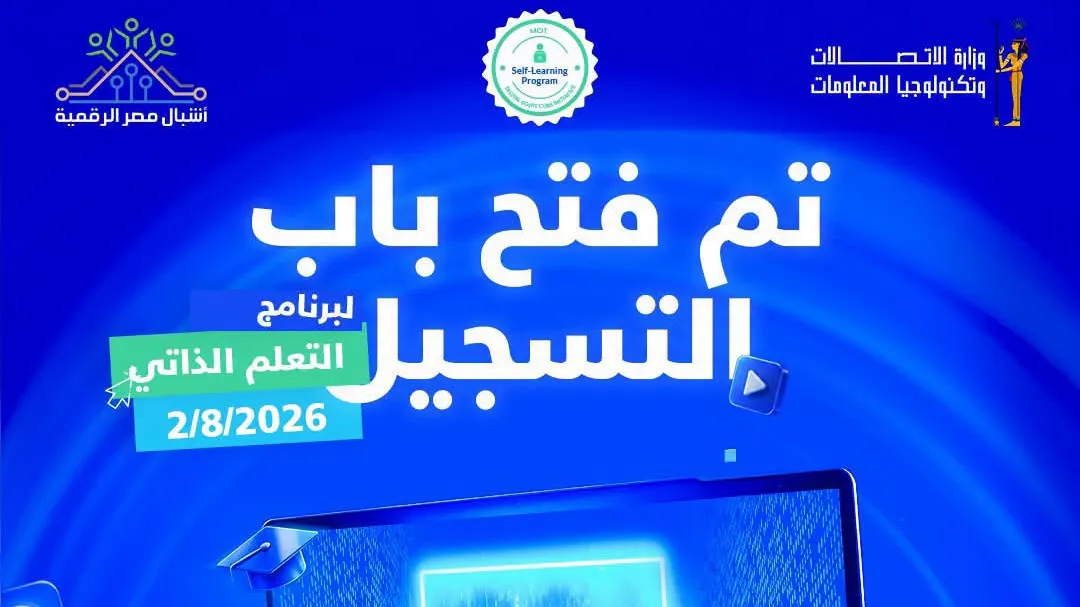
Egypt's Digital Cubs Initiative Launches Flexible Online Learning for Middle and High School Students
Great news! The Ministry of Communications and Information Technology has just rolled out its first self-learning program as part of the 'Digital Egypt Cubs Initiative.' This exciting new program offers online training for middle and high school students, making digital skills accessible to young Egyptians both inside and outside the country.
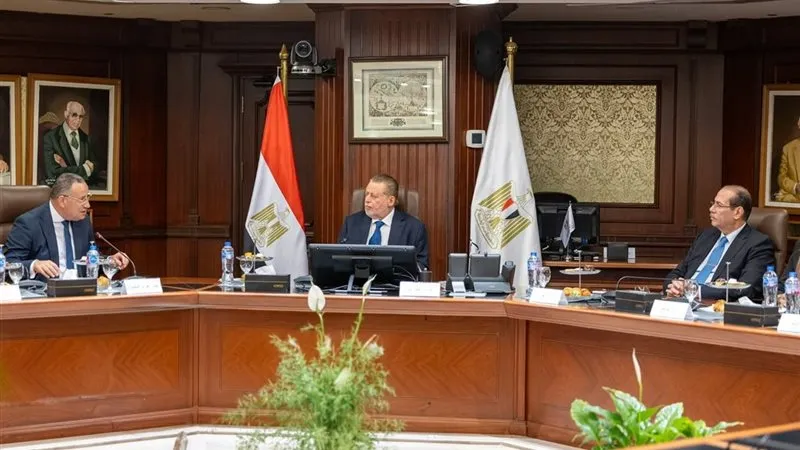
Egypt's Central Bank and Higher Education Ministry Expand 'Future Scholars Grant' for New Batch of Top Students
The Central Bank of Egypt and the Ministry of Higher Education are getting ready to welcome a new group of students into the 'Future Scholars Grant' program. They're expanding their support for outstanding students, especially those attending private universities, to give more talented young people a chance to shine!
Egypt's Ministry of Communications Opens Applications for 'Digital Egypt Cubs' Self-Learning Program
Egypt's Ministry of Communications and Information Technology just announced that applications are now open for the self-learning program under the 'Digital Egypt Cubs' initiative. This exciting opportunity is for middle and high school students, offering a 5-month online training experience with specific enrollment conditions.
Egypt's Ministry of Education Opens STEM School Applications for Top Students for 2026/2027
Hey there! The Ministry of Education just announced that online applications are now open for STEM schools and the Ain Shams School for Gifted Students. If you're a high-achiever, make sure to apply by August 9th, 2026! Admission tests will follow from August 16th to 20th, 2026.