

The rapid advancements in AI tools are completely changing how we approach software development. This impact isn't just about writing code faster; it's also about the new skills developers and engineers need to stay competitive in a market that's evolving at lightning speed. In this context, Basem Muharramah, former head of the National Cyber Security Center in Jordan (NCSC-Jordan) and a specialist in cybersecurity and AI, sheds light on the new skill map for AI engineering. He bases his insights on Andrew Ng's (Coursera founder) perspective on the significant shift in how software is built compared to 2022. According to Muharramah, having the right skills opens up new opportunities in projects and jobs for specialists. However, amidst all the buzz around AI, it's crucial to pinpoint the skills that truly add value in a real-world work environment. This AI engineering skills map is based on an analysis of over 10,000 job postings, along with interviews with experts, hiring managers, and surveys, all aimed at identifying four core skills for anyone serious about building a career in this field.
Building and Deploying AI Applications
Working with AI is no longer just about using a ready-made model. The nature of AI system outputs differs from traditional software, making it essential to understand how to build, test, and improve these systems. Required skills include understanding Large Language Models (LLMs), RAG techniques, AI agents, along with evaluation tools (Evals) and error analysis. The goal is to create more reliable applications that can perform effectively in real-world scenarios.Software Engineering Fundamentals
Even though AI tools are becoming more capable of writing software, this doesn't diminish the importance of engineering knowledge. On the contrary, understanding cost, scalability, security, and privacy becomes even more critical when evaluating solutions produced by these tools. Therefore, developers need to guide AI tools and make appropriate engineering decisions, rather than letting the tools determine how a system should be built on their own.Using Coding Agents
Coding agents have become key tools in the development process, but their value comes not just from running them, but from the developer's ability to manage them efficiently. This includes managing context, determining when work needs planning versus execution, and providing verification tools for the agent to help produce more robust code, while reducing time and token consumption.Product Shaping and Defining What to Build
As agents become more capable of executing programming tasks, greater importance shifts to the aspect that isn't about execution itself, but about defining what *should* be built. This is where understanding businesses and customers, and having a product sense, becomes crucial. It allows you to identify problems worth solving and translate them into actionable products. The better AI tools become at answering the question, "How do we build it?", the more important human ability becomes in answering, "What should we build? And why?"Continuous Learning: The Skill That Ties Everything Together
These skills are inseparable from an even more critical factor: the ability to learn continuously, especially since AI tools, models, and development methods are changing so rapidly. Therefore, developers don't need to wait for a job title like "AI Engineer" to start developing these skills. AI is already an integral part of the software development environment, and the ability to work with it efficiently is becoming a fundamental component of the future of engineering work. The real transformation isn't about AI replacing developers; it's about redistributing roles. The focus shifts from just writing code to understanding the problem, guiding tools, evaluating results, making decisions, and defining which products are worth building.
Related editorial

AiMOGA's Global Leap: 2,000 Robots Now Operating in Over 60 Countries
AiMOGA has successfully delivered over 2,000 robots beyond China, reaching more than 60 countries worldwide. This impressive global expansion is driven by the company's expanding range of applications and the robust international industrial network of its partner, Chery.

Dr. Hisham Hadara: An Egyptian Tech Leader's Journey in Semiconductors and Innovation
Dr. Hisham Hadara's impressive career began in electrical engineering and microelectronics, leading him to become a prominent figure in advanced electronic systems. With over 40 years of experience, he's now the CEO of Si-Ware Systems, a company at the forefront of semiconductor and sensor technology. His journey showcases a remarkable blend of academic research, entrepreneurship, and deep tech innovation, making a significant impact from Egypt to global markets.
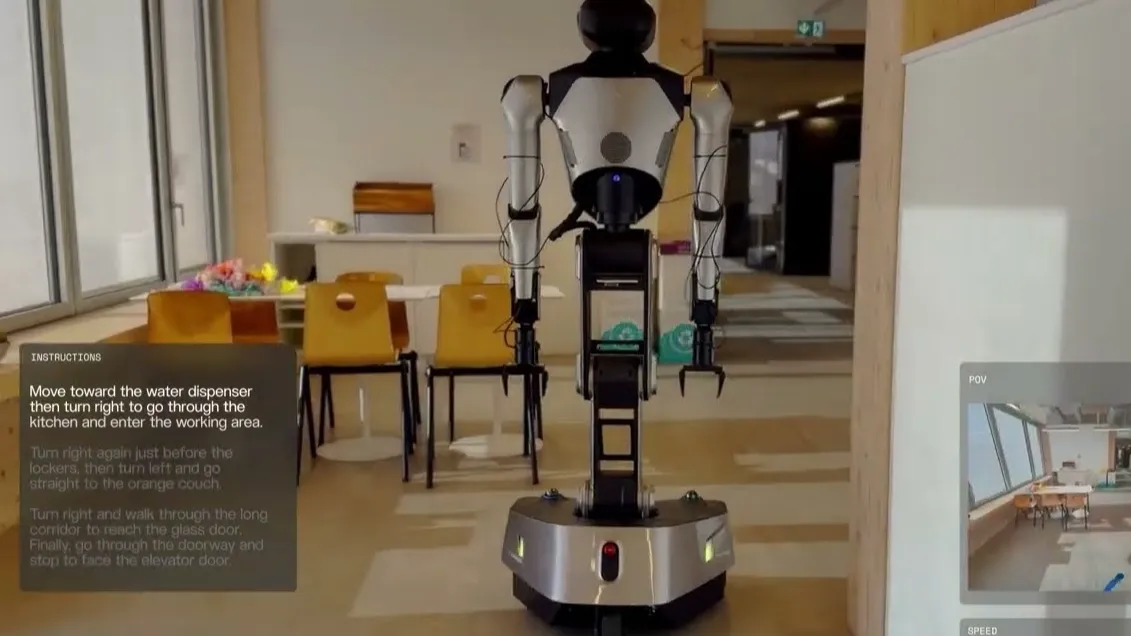
Mistral AI's Robostral Navigate: Guiding Robots with Just One Camera
Mistral AI has developed a new model, Robostral Navigate, that lets robots move around complex environments using only a single RGB camera. This innovative system was trained entirely in-house using simulated data, rather than relying solely on real-world movement data. It's a big step towards making robots smarter, more affordable, and easier to use across many industries.

1001 AI: Gulf's $39M Bet on AI to Transform Critical Infrastructure
Meet 1001 AI, a groundbreaking sovereign AI platform that's connecting data and operational systems to supercharge decision-making and efficiency. This innovative company just raised $39 million to help transform critical sectors like airports, ports, energy, and construction across the Gulf region.